By Ans Ali
Product Design & Development
How to Design an MVP That Can Actually Launch
summary
A practical MVP product design guide for startup founders. Learn how to define the core workflow, prototype, build and launch without unnecessary complexity.
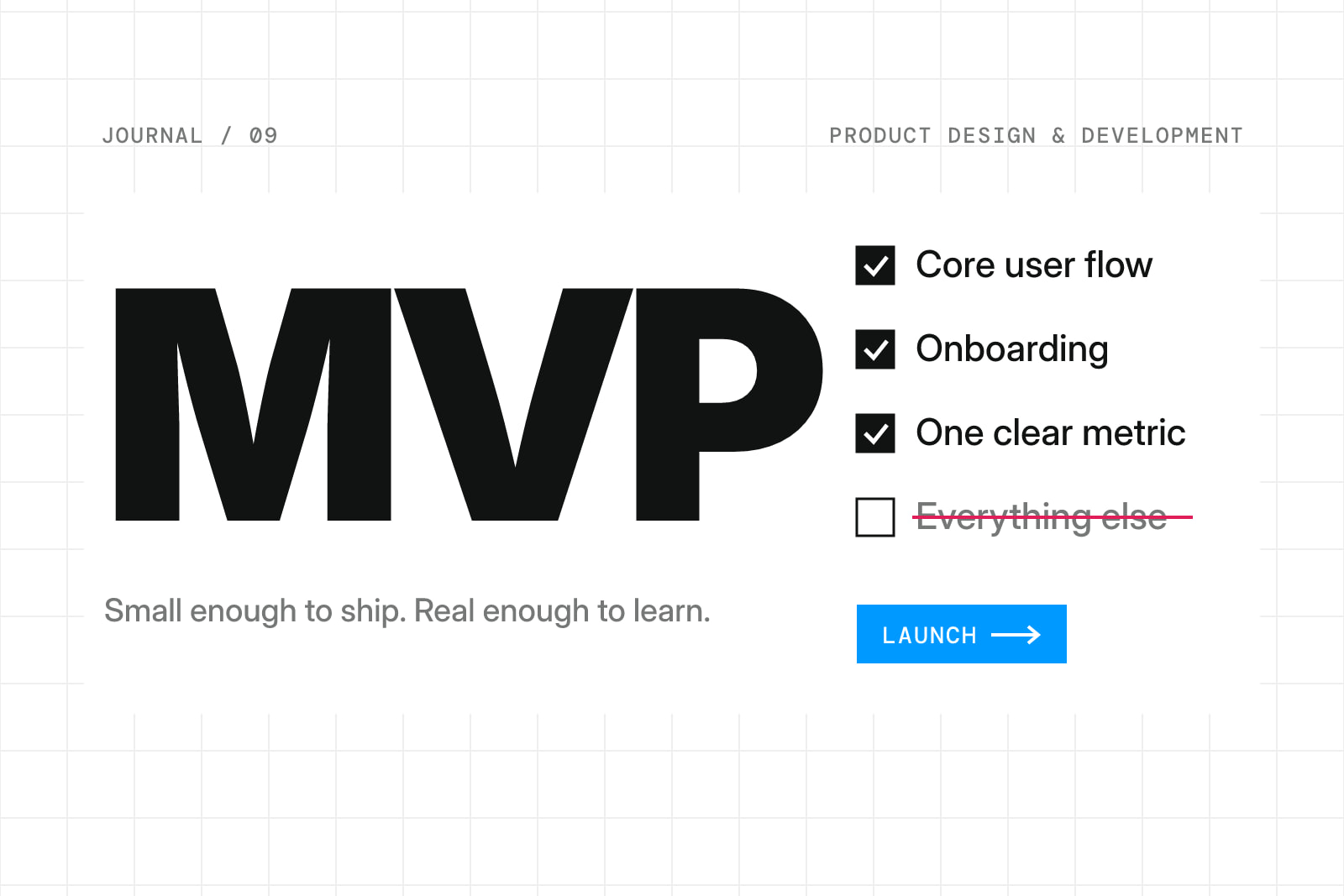
When you're building a new product, it's easy to imagine everything it could become.
More features. More integrations. More settings. More possibilities.
The list grows quickly.
But a first version doesn't need to do everything.
It needs to do something useful, reliably.
The short answer: A good minimum viable product focuses on one important user problem, supports a complete core workflow, and gives the team a practical way to learn from real usage. The goal isn't to build the smallest number of screens. It's to deliver the smallest useful experience.
Start With the Problem, Not the Feature List
Founders often arrive with a long list of features.
That's understandable. They've spent time thinking about the product, researching competitors, and imagining how it should work.
But I like asking a simpler question first:
What is the one thing a person should be able to accomplish?
Not what the product might do in a year.
What should someone be able to finish today?
That answer gives the initial product a direction.
Design the Complete Workflow
A common mistake is focusing on the main feature while overlooking everything around it.
Imagine an application that generates a document from a conversation.
Generating the document is only one step.
The user may need to review the information, correct mistakes, save the result, share it, or return to it later.
Those steps determine whether the product is actually useful.
Think in User Journeys
I like mapping the experience from beginning to end.
Where does someone start?
What information do they need?
What decisions must they make?
What happens when something goes wrong?
And how do they know the task is complete?
Answering these questions early makes the interface easier to design and the product easier to build.
Prototype Before Overbuilding
A prototype gives people something tangible to respond to.
It doesn't need perfect animations or a complete design system.
It needs enough detail to communicate how the product should work.
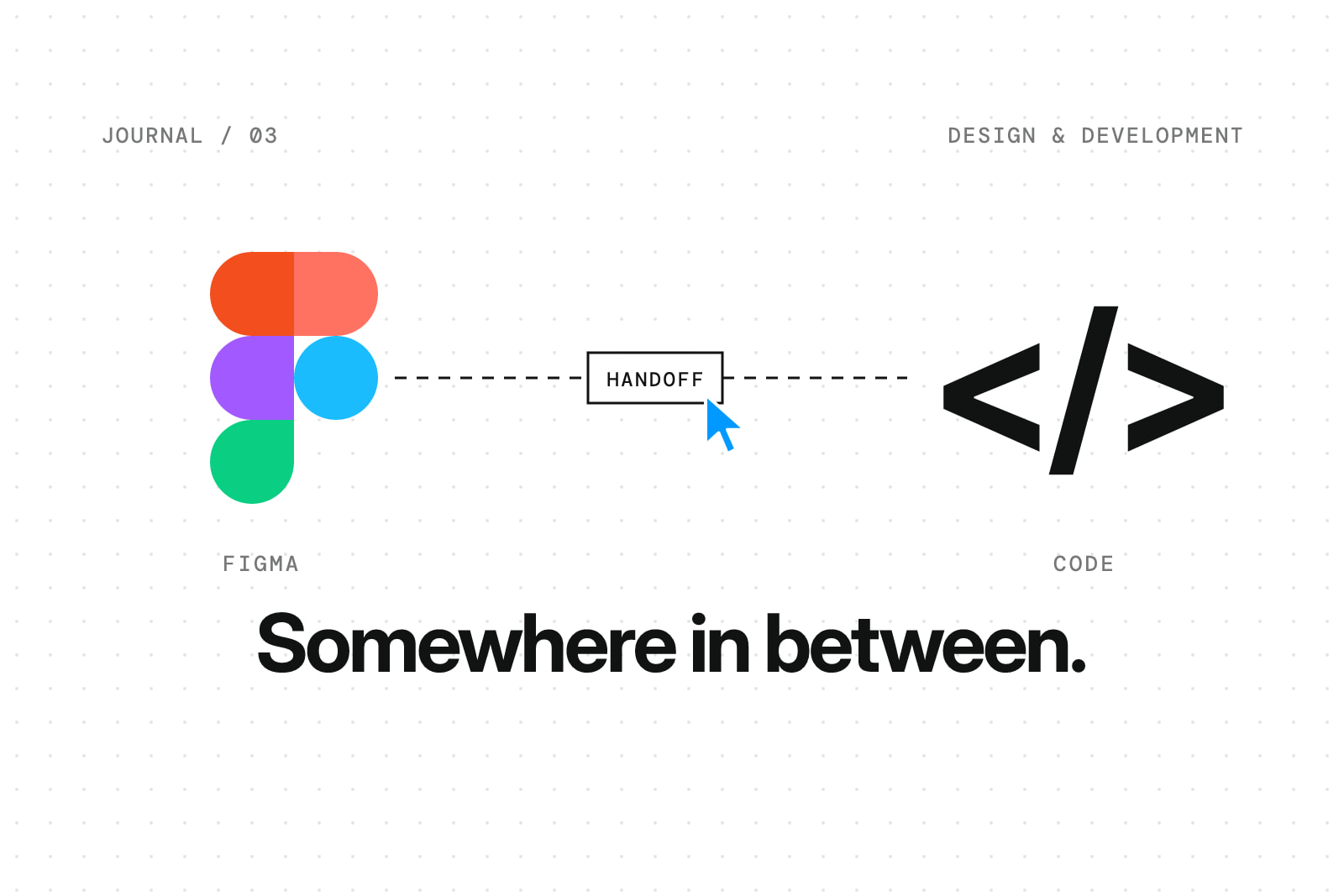
Sometimes a Figma prototype is enough.
Other times, a small working version reveals more useful feedback, particularly when the product relies on complex interactions.
I prefer testing important assumptions before building features that may not be needed.
Build a Foundation You Can Extend
An MVP should be simple, but simple doesn't mean careless.
Authentication, permissions, validation, and data handling can become important very quickly.
The right architecture depends on the product.
A basic landing page and a healthcare application have very different responsibilities.
It's worth identifying the parts of the system that need to be reliable from the beginning.
Everything else can be prioritized around that foundation.
A Lesson From Building Denty
Working on Denty, an AI-assisted dental documentation and consent platform, reinforced how important it is to think beyond the most impressive feature.
Generating structured information from a clinical conversation is useful.
But the broader experience also needs to support review, document preparation, and patient signatures.
The real value comes from connecting those steps into a workflow someone can actually complete.
That changed how I thought about the product.
Instead of asking only what the technology could generate, the more useful question became what the user needed to finish.
Launch, Then Learn
A first release is not proof that every decision was right.
It's an opportunity to see how the product behaves outside the design file.
Some assumptions will hold up.
Others won't.
People may use features differently from how you expected, or struggle with steps that seemed obvious during development.
That feedback should influence the next iteration.
You don't need to predict the entire future of the product before launching.
You need a clear first version and a way to learn from it.
Frequently Asked Questions
What is MVP product design?
MVP product design focuses on creating the essential user experience needed to deliver and validate a product's core value.
Should an MVP have polished UI?
It should be clear, usable, and credible. High visual polish can help, but it shouldn't come at the expense of functionality or learning.
How long does it take to design an MVP?
It depends on the complexity, number of workflows, technical requirements, and how much validation has already been done.
Should I hire a product designer or developer first?
The answer depends on the project's needs. Someone who works across both disciplines can help connect product decisions with implementation constraints.
Have a product idea you want to make real?
I work with founders from early product thinking and design through to working software.
Book a call
Let's make something happen.
Building a product, launching a startup, or rethinking your website? Pick a time that works for you and let's talk through your project, goals, and next steps.