By Ans Ali
SEO & AI Search
How to Make Your Website Easier to Find in AI Search
summary
Learn how to improve website visibility in Google AI Overviews, ChatGPT Search and AI-generated answers using practical SEO, AEO and GEO principles.
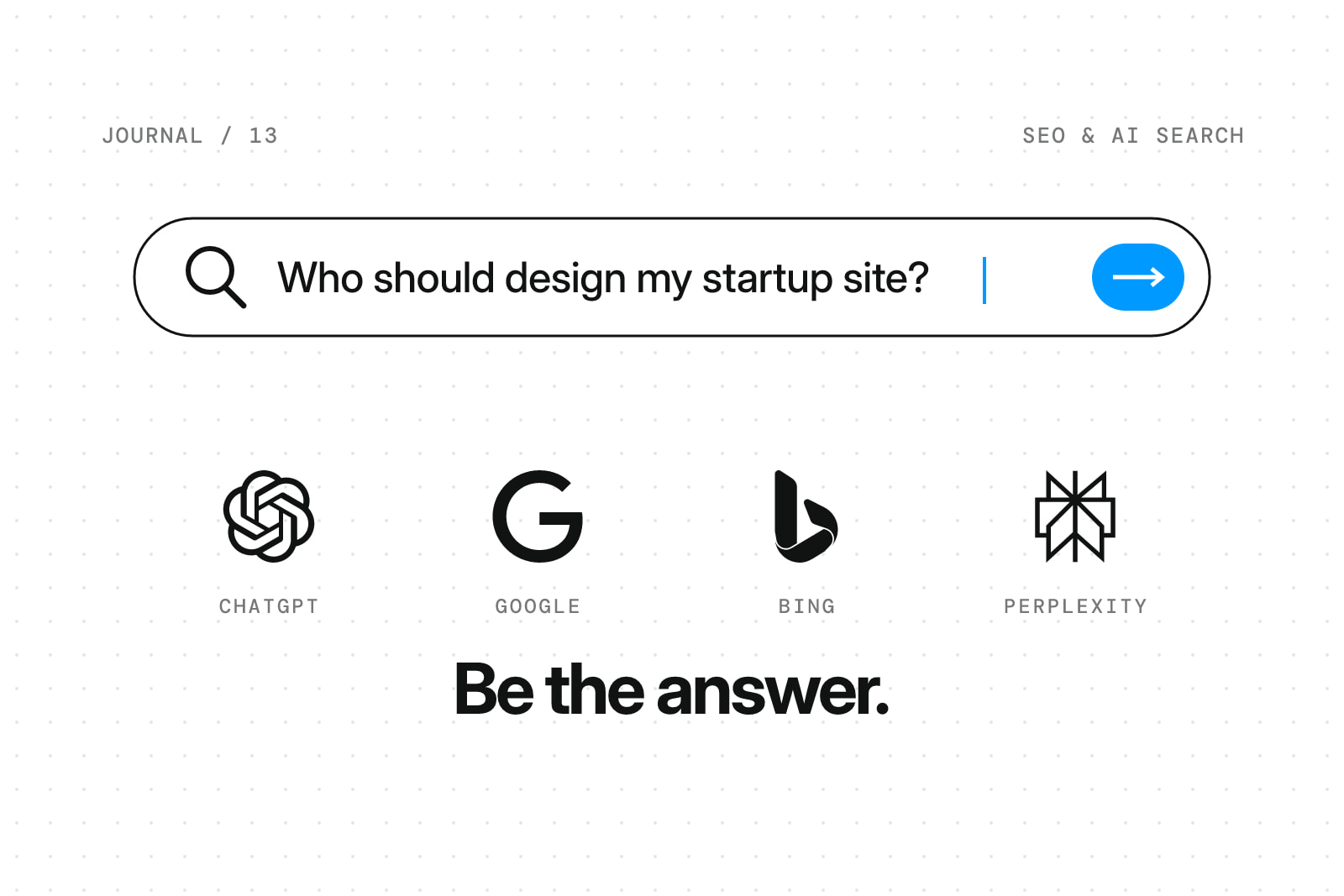
People are discovering businesses in more ways than they used to.
Instead of searching through ten websites, someone might ask an AI assistant to compare services, explain a product category, or recommend a solution for a specific problem.
That changes how founders should think about their websites.
The short answer: To improve visibility in AI search, make your content crawlable, answer relevant questions clearly, demonstrate real expertise, and maintain accurate information. Strong traditional SEO remains the foundation. There is no reliable shortcut that guarantees AI citations.
Here's how I'd approach it.
SEO, AEO and GEO: What's the Difference?
These terms sound more complicated than they need to be.
SEO (Search Engine Optimization) focuses on helping people discover your website through traditional search results.
AEO (Answer Engine Optimization) focuses on making information useful and accessible for systems that provide direct answers.
GEO (Generative Engine Optimization) is commonly used to describe efforts to improve how content is represented and cited in generative AI responses.
In practice, they overlap significantly.
Google's guidance emphasizes that the fundamentals of SEO still apply to its AI search experiences.
You don't need three separate websites or three completely different content strategies.
You need information that's genuinely useful, easy to access, and supported by credible evidence.
1. Start With Questions Customers Actually Ask
Imagine you're building a website for a technical startup.
You might explain the platform's features in detail, but potential customers could still be wondering:
What does this product replace?
How is it different from existing alternatives?
Is it suitable for a small team?
How difficult is it to integrate?
Those questions are useful content opportunities.
I prefer starting with what the audience needs to understand rather than writing pages around isolated keywords.
A clear answer is valuable whether the visitor arrives through Google, ChatGPT, or a direct referral.
2. Make the Website Understandable
A search crawler should be able to access your important content.
Use descriptive page titles, meaningful headings, readable text, internal links, and sensible URLs.
Don't hide your entire product explanation inside an animation, inaccessible canvas, or image.
Visual design can make a website memorable.
But the underlying content still needs to explain what the product does.
For JavaScript-heavy websites, pay particular attention to rendering and whether crawlers can access the page's main text.
3. Publish Something Worth Referencing
This is where I think many AI-search strategies get the priorities wrong.
Instead of asking how to make AI mention a page, ask why anyone would cite it.
A useful page might include an original comparison, a real implementation example, a documented workflow, or a thoughtful explanation of a difficult problem.
For a design and development portfolio, real project decisions can be more valuable than another generic article about website trends.
Explain the problem.
Show the reasoning.
Describe the constraints.
Make it clear what you actually learned.
That's much more useful than repeating the same advice available everywhere.
4. Make Your Information Credible
If you're publishing professional advice, make it clear who wrote it.
Include an author profile, relevant experience, and links to supporting sources.
Where possible, show real examples instead of broad claims.
If you're comparing technologies, reference official documentation.
If you're discussing results, make sure the numbers are accurate.
AI-generated summaries can be incomplete or incorrect, so providing precise, verifiable information matters.
5. Check Whether Search Bots Can Access Your Site
This is a technical step that is easy to overlook.
Google Search has established crawling and indexing requirements. ChatGPT Search also has its own search crawler, OAI-SearchBot.
If you want your content to be eligible for ChatGPT Search summaries and citations, avoid accidentally blocking that crawler in your robots configuration or hosting security settings.
You should also ensure important pages are publicly available, return successful responses, and aren't marked noindex.
Allowing access creates eligibility. It doesn't guarantee inclusion.
6. Measure What Happens
Publishing is only the beginning.
Use Google Search Console to understand search visibility and relevant queries.
Google also provides a generative AI performance report that can help eligible site owners examine impressions from generative AI search features.
Bing Webmaster Tools provides AI citation reporting for supported Microsoft AI experiences.
These reports are useful, but citation counts and rankings are different things.
Look for patterns over time, then improve the content that serves your audience best.
Frequently Asked Questions
Can I rank my website in ChatGPT?
A public website can be eligible for discovery in ChatGPT Search, but you cannot guarantee placement. Relevant, reliable content and crawler access are important starting points.
Does schema markup guarantee AI citations?
No. Appropriate structured data can help search systems interpret pages, but it doesn't guarantee citations in AI-generated answers.
Do I need an llms.txt file?
Not for Google AI Search. Google's guidance says it does not use that file for its search ranking and AI features. Other systems may have different requirements.
Is traditional SEO still worth doing?
Yes. Technical accessibility, useful content, internal linking, and authority remain important for both traditional and AI-driven discovery.
Need a clearer, more discoverable website?
I design and build websites that communicate complex products clearly, with search-friendly structure from the start.
Book a call
Let's make something happen.
Building a product, launching a startup, or rethinking your website? Pick a time that works for you and let's talk through your project, goals, and next steps.